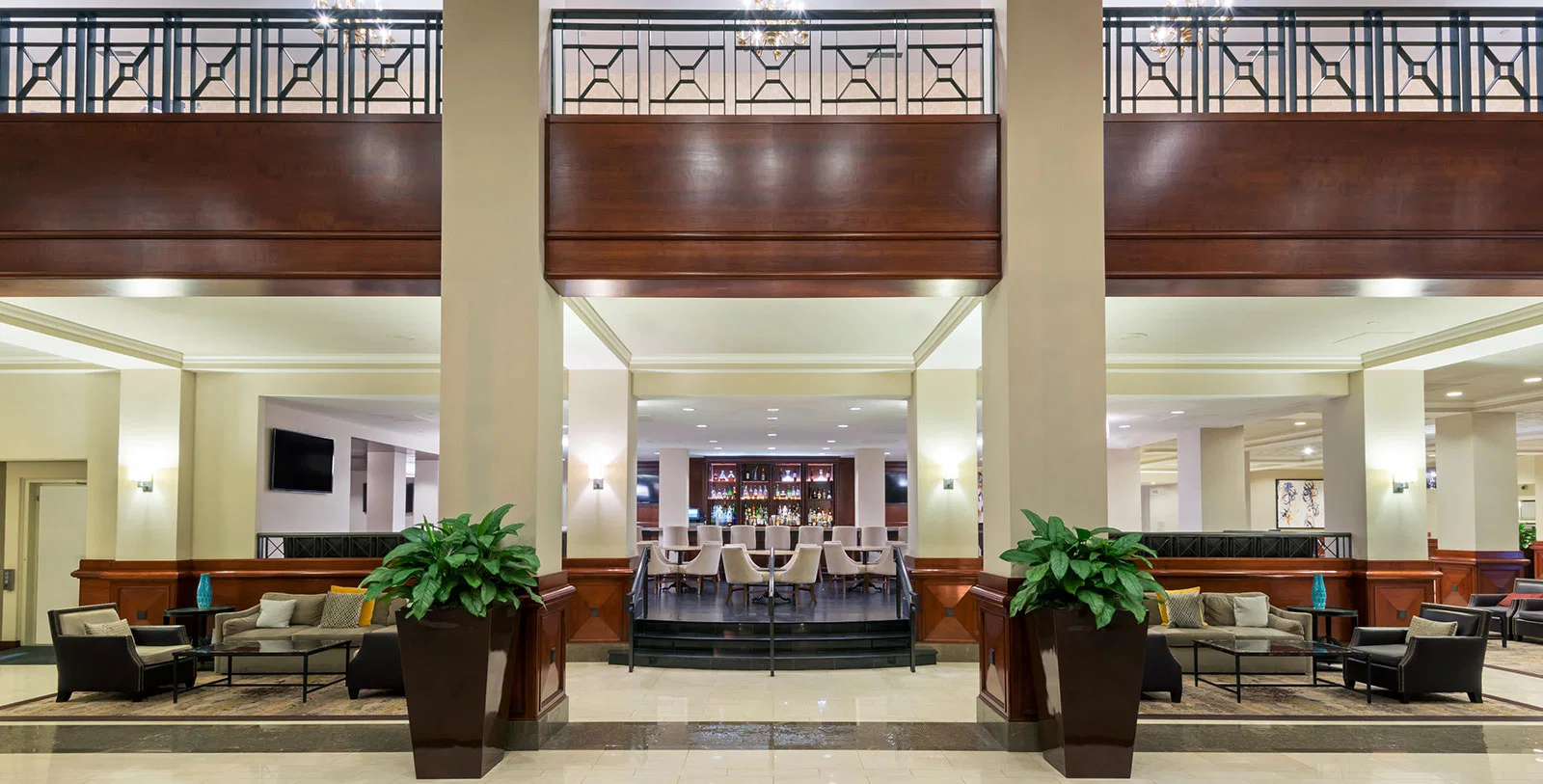
Capital Hilton should be planned as a working environment with its own dock logic, contractor approvals, service ordering rhythm, and attendee flow. The hilton is positioned in Washington, DC within the Downtown DC / Federal Core area. Those conditions shape how the booth is designed, when labor can start, how power and AV are installed, and what has to be finished before doors open.
Teams exhibiting at the hilton usually need more than a booth drawing. They need a reliable schedule for freight arrival, material handling, graphics readiness, utility orders, labor sequencing, and show-site supervision. The earlier those pieces are aligned, the easier it is to protect both the venue relationship and the event outcome.
What we focus on
- Confirm venue approvals, utility ordering, and labor windows early enough to protect the schedule.
- Keep one production calendar for graphics, AV, fabrication, shipping, install, and strike.
- Use show-site supervision and stakeholder check-ins to protect a venue-ready plan that protects install, show hours, and dismantle.
Working at Capital Hilton
29,973 square feet of total meeting space.
Capital Hilton tends to work best for conferences, headquarters hotels, breakout heavy programs, sponsor events.
Running a project here means working against the venue's own exhibitor manual, dock windows, and service-order deadlines. Those details are confirmed before any build commits to fabrication.
National Harbor trade show market
Trade shows in National Harbor move fast.
Scope gets tighter; standards don't.
The Walter E.
The advantage of a local National Harbor team
The difference from a national vendor shows up at the dock.
Clients who run repeat programs across multiple dates end up paying less per event when the same team handles everything. Less re-briefing, less re-training, less re-checking — the operational overhead drops year over year.
National Harbor labor and venue services
Marriott Marquis Washington, DC: Washington.org lists Marriott Marquis Washington, DC as 'Unionized,' which is a public signal that some convention-core hotels publish explicit labor status.
Promise current venue review, organizer-manual review, and coordination with house or approved providers when required. Frame labor execution around planning, supervision, sequencing, and compliance with venue-specific rules.
Line items on a typical project
Individual projects layer or remove items based on scope.
Out of scope by default are show organizer fees, booth lease costs paid directly to the show, staff travel and per diems, and any custom software or data-capture tooling the client runs on its own stack. Those stay on the client side and plug into the project through coordination, not rebilling.
The process from start to finish
Venue coordination comes next.
Install days are owned by a single on-site lead.
During show hours, the booth is a live operating space.
That document drives the next booking.
Budget and timeline
Cost scales with how it is built, how big it is, what the venue charges for its own services, what the graphics look like, how far the crates travel, and how many days the team stays on-site.
Lead time drives everything. Custom: 16 to 20 weeks. Rental: 8 to 12.
What a successful project looks like
Trade show ROI is measured at the lead and pipeline level.
A week after the show, the booth's actual floor performance is already clearer than any pre-show projection. We document those observations alongside the technical closeout so the next cycle inherits real signal, not nostalgia.
Frequently asked questions
How does labor work in National Harbor?
It runs venue by venue.
How much lead time is ideal?
Custom builds run best with 16 to 20 weeks of lead time. Rentals take 8 to 12 weeks.
What information kicks off a project?
The show, the venue, the booth number, the dates, and a target budget range. From those, an initial scope and a realistic cost come back within a few days.
Who runs the booth on-site?
One named show-site lead runs the install, the show hours, and the strike. That person carries the floor plan and the punch list from crates to doors and reports up once a day.
Can the booth travel to the next city on our calendar?
Same structure, swappable graphics, standard crates.
What happens if something breaks during show hours?
The on-site lead handles it.