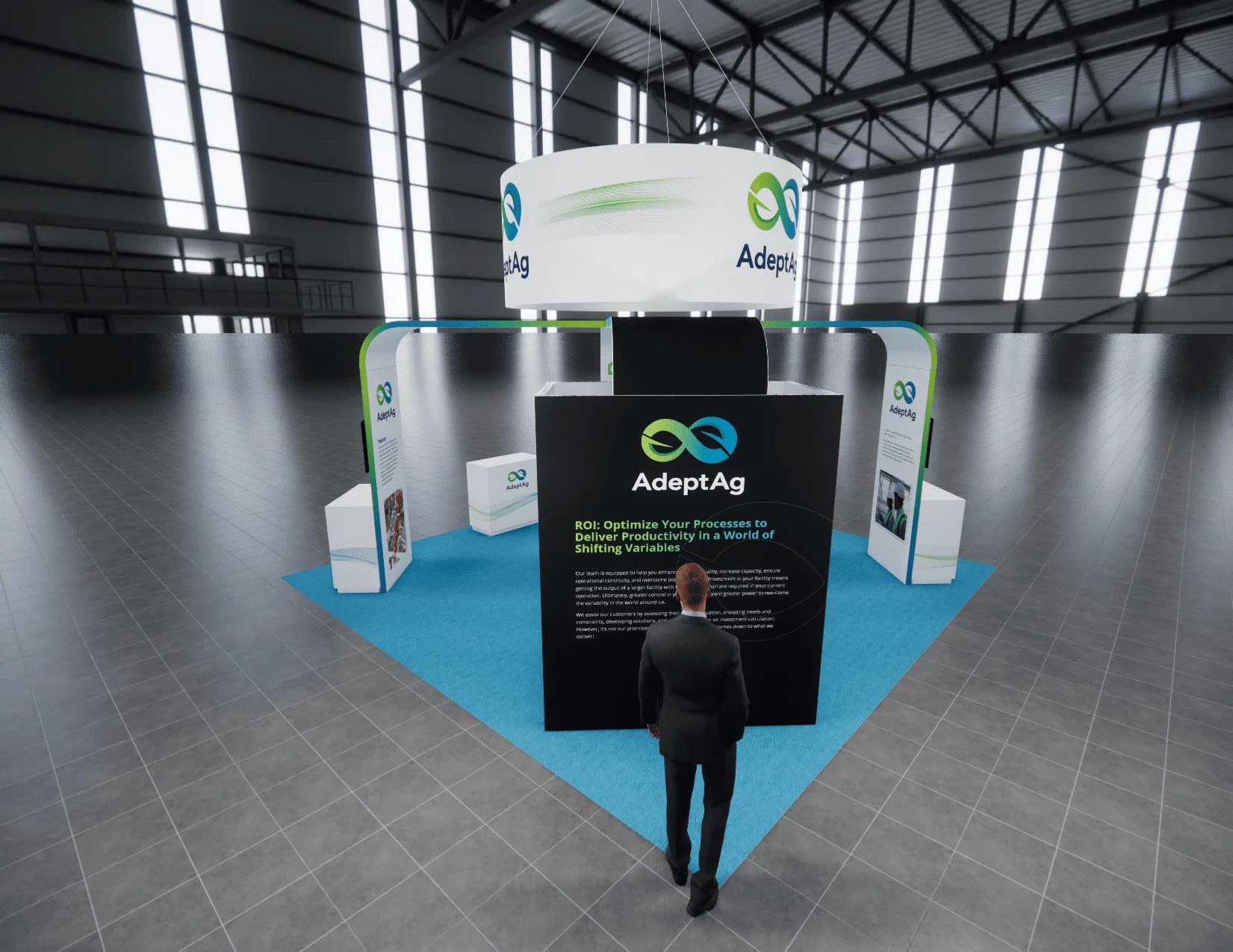
Trade Show Installation and Dismantle works best when it is scoped as part of a complete show operation.
The dismantle has to support that pace without weakening finish quality, schedule control, or the exhibitor's ability to meet people effectively once the room opens.
The reason buyers ask for the dismantle is rarely cosmetic.
What we focus on
- Frame Trade Show Installation and Dismantle around planning, production, and field execution under one schedule.
- Test Trade Show Installation and Dismantle against design decisions, fabrication timing, and move-in control before graphics, labor, or freight are locked.
- Use show-site supervision and stakeholder check-ins to protect a cleaner install, steadier show week, and fewer handoff gaps.
National Harbor trade show market
Trade shows in National Harbor move fast. Major venues book out months in advance, freight windows run tight, and the exhibitors who win their weeks are the ones who arrive with a plan already in hand.
Trade show weeks in National Harbor compress decisions. Dock windows are finite, rigging slots fill fast, and the labor calendar around a citywide conference runs hot. Exhibitors who treat planning as optional lose time they don't get back.
destination-management, production, transportation, and event-support partners, reinforcing that the harbor works as a full event district instead of a single-building destination.
Alexandria can host groups up to 800 attendees and markets the city as a real meetings option just outside Washington, which supports nearby overflow and boutique-conference demand, which sets the practical ceiling for a booth program working the market.
Downtown DC Conventions and Association Programs drives a meaningful share of National Harbor show demand. The Walter E. Washington Convention Center and surrounding hotel inventory create the region's highest-intent convention core.
Where National Harbor shows actually happen
The building matters more than almost anything else in a trade show plan. A few National Harbor venues carry most of the calendar.
A venue walk — either in person or via the published floor plan — is the step that reveals constraints no spec sheet shows. Column spacing, real ceiling height at the grid point, and dock access shape what's actually buildable.
Carnegie Library at Mt. Vernon Square: historic event venue adjacent to the convention center and relevant for receptions, launches, and branded experiences.
Carnegie Library at Mt. Vernon Square suits galas, special events, sponsor receptions, private events.
The advantage of a local National Harbor team
Trade Show Services of National Harbor operates out of National Harbor with a full in-house production shop. Custom fabrication, rental inventory, graphics production, and show-site labor live under one roof.
The difference from a national vendor shows up at the dock. A local team with an in-house shop can solve most install-day problems in the time it takes to drive back to the building with the right part.
Over a multi-show calendar, the compound value of a single team shows up in fewer surprises. The second install is faster than the first, the third is faster than the second, and by the fourth the project runs on memory and documentation rather than first-principles planning.
Who handles what during the National Harbor install window
Most of what goes wrong on a National Harbor install traces back to assumptions about labor. Staying inside the venue's published rules for the specific show prevents it.
On most National Harbor shows, the labor plan takes one call with the venue's exhibitor services desk, one review of the current manual, and one email to the general contractor. Skipping any of those three is usually where problems start.
Marriott Marquis Washington, DC: Washington.org lists Marriott Marquis Washington, DC as 'Unionized,' which is a public signal that some convention-core hotels publish explicit labor status.
Describe the market as mixed, venue-aware, and exhibitor-appointed-contractor friendly where permitted.
Where National Harbor shows cluster
The Tysons and Fairfax Corridor area runs through Tysons, McLean, Reston, Herndon. Corporate, theater, and expo submarket extending west toward Dulles and Fairfax County.
Montgomery County Conference Belt — Bethesda, North Bethesda, Rockville — is a different environment. Maryland-side corporate and conference zone north of DC with large-format hotel meeting space and training-event demand.
Scope on a trade show installation and dismantle project
Project scope usually spans design, fabrication, graphics, AV, labor coordination, freight, install, show-hours support, and strike.
What shows up in most budgets: structure, graphics, AV, show-service orders through the venue, labor, freight, supervision days, and closeout. Individual projects layer or remove items based on scope.
A well-run project has few surprises on install day because the handoffs upstream were tight. A bad one has many, because they weren't.
Multi-show programs add asset management: storage, refurbishment, graphic swaps, and scheduled re-kitting so the booth rolls cleanly from National Harbor to the next city on the calendar.
Out of scope by default are show organizer fees, booth lease costs paid directly to the show, staff travel and per diems, and any custom software or data-capture tooling the client runs on its own stack. Those stay on the client side and plug into the project through coordination, not rebilling.
From first call to strike
First step on any project is pinning down the show, the floor plan, the deadlines, and what success actually looks like. Everything downstream hinges on those answers.
Venue coordination comes next. That means pulling the current exhibitor manual, confirming dock and freight windows, submitting rigging approvals where needed, and placing utility orders against the building's published specs.
With venue details locked, production runs. Build, print, AV integration, rentals, and the on-site lead's playbook all come together in this phase.
The install phase has one owner on the floor. That person handles the labor calls, the graphics questions, the sequence adjustments, and the daily update.
During show hours, the booth is a live operating space. The on-site team handles repairs, sponsor requests, lead-capture issues, and any venue questions so the client's staff can focus on conversations.
After the show, strike runs against the venue's posted window, and a same-day debrief captures what held and what needs to change before the next date.
Budget and timeline
Pricing is driven by real line items: fabrication or rental, graphics, show services, labor, freight, and travel where it applies. Round numbers without that breakdown usually hide something.
The levers that matter: build path (custom, rental, or hybrid), footprint, venue service fees, graphics, freight, and supervision days. A 10x10 turnkey rental and a 30x50 custom island with a double deck are entirely different projects.
A clean schedule starts 4 to 5 months out for custom work and 2 to 3 months for rentals. Shorter lead times are workable but push rush premiums and limit material choices.
What a successful project looks like
A successful project in National Harbor looks like a booth that lands on time, passes venue inspection on the first walk, runs without incident through show hours, and ships out the same day it strikes.
Exhibitors who measure programs seriously track leads, floor-booked meetings, and post-show pipeline. The build and the install are upstream inputs to those KPIs.
Client teams sometimes want the booth to carry the pipeline on its own, but the best-performing programs treat the booth as a platform and put real operators on it. On-floor conversation discipline moves the KPIs more than any scenic decision.
Frequently asked questions
Do you work at Marriott Marquis Washington, DC?
Yes. Marriott Marquis Washington, DC is positioned in Washington, DC within the Penn Quarter / Convention Center area.
How does labor work in National Harbor?
It runs venue by venue. Marriott Marquis Washington, DC: Washington.org lists Marriott Marquis Washington, DC as 'Unionized,' which is a public signal that some convention-core hotels publish explicit labor status.
How much lead time is ideal?
Custom builds run best with 16 to 20 weeks of lead time. Rentals take 8 to 12 weeks.
What information kicks off a project?
The show, the venue, the booth number, the dates, and a target budget range. From those, an initial scope and a realistic cost come back within a few days.
Who runs the booth on-site?
One named show-site lead runs the install, the show hours, and the strike. That person carries the floor plan and the punch list from crates to doors and reports up once a day.
Can the booth travel to the next city on our calendar?
Same structure, swappable graphics, standard crates.
What happens if something breaks during show hours?
The on-site lead handles it.