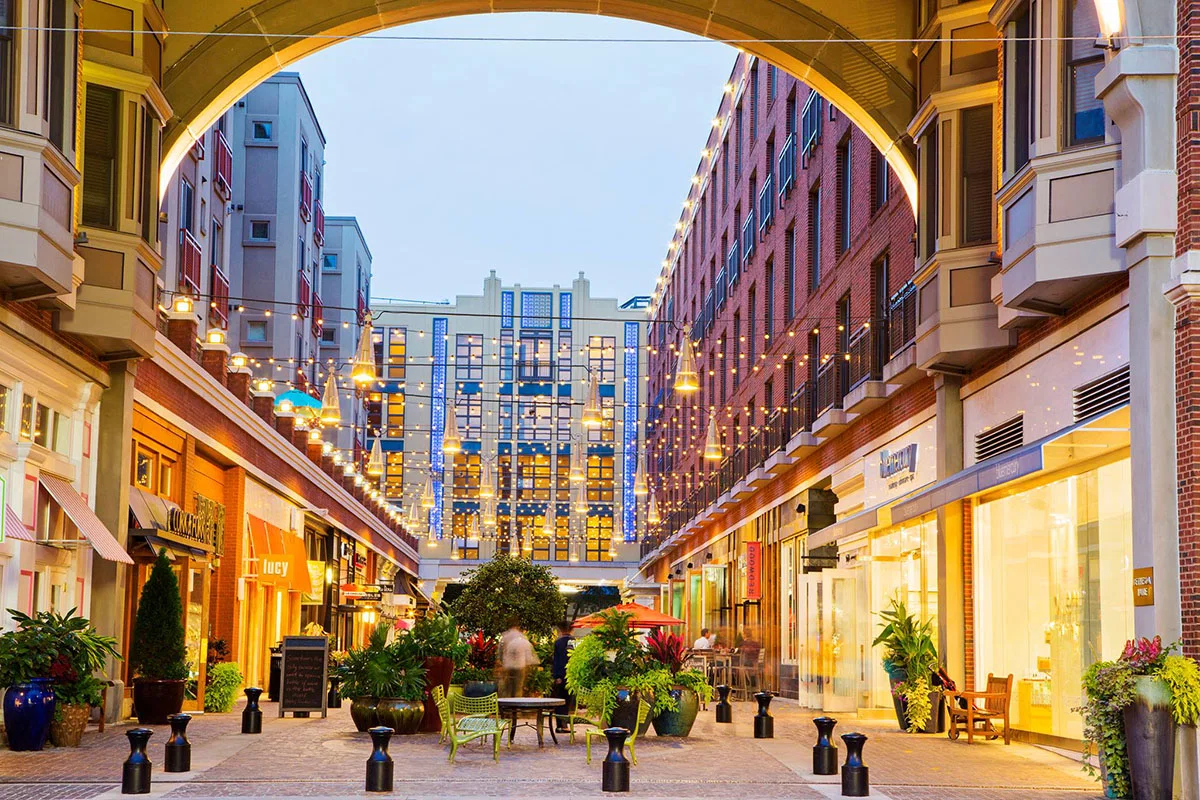
Bethesda is tied to the broader Washington event economy through corporate, medical, and conference demand close to downtown dc..
That is why Product Launch Event Buildouts and national harbor citywides and waterfront conventions activity matter here: they influence how much control the exhibitor needs before install begins and how much flexibility the booth must keep during show week.
What we focus on
- Confirm venue approvals, utility ordering, and labor windows early enough to protect the schedule.
- Keep one production calendar for graphics, AV, fabrication, shipping, install, and strike.
- Use show-site supervision and stakeholder check-ins to protect a market strategy that matches the calendar, freight path, and venue mix.
Trade show work in Bethesda
Bethesda is part of the National Harbor event market.
Production for Bethesda shows starts with the same brief we run for the rest of National Harbor: venue specifics, show dates, footprint, outcome. Freight paths and local vendor availability are the variables that shift from the city core.
The National Harbor event landscape
National Harbor is a working trade show market.
Trade show weeks in National Harbor compress decisions.
National Harbor venues we work
The right building depends on the show: a consumer expo wants open aisles and broad traffic flow; a corporate conference wants controlled breakout space; a brand activation wants a venue that can carry scenic and production without fighting the architecture.
Gaylord National Resort & Convention Center: gaylord National Resort & Convention Center is positioned in National Harbor, MD within the National Harbor / Oxon Hill area.
Operational rules on the National Harbor floor
Walter E.
Practical planning rules for Bethesda in National Harbor: Describe the market as mixed, venue-aware, and exhibitor-appointed-contractor friendly where permitted. Promise current venue review, organizer-manual review, and coordination with house or approved providers when required.
Scope in Bethesda
For programs that repeat, asset management becomes part of the engagement — storage, graphic rotation, refurbishment, and re-crating are planned rather than one-off.
Scope boundary is as important as scope inclusion.
What an engagement actually looks like
Venue coordination comes next.
Install days are owned by a single on-site lead.
During show hours, the booth is a live operating space.
That document drives the next booking.
Pricing and scheduling
Cost scales with how it is built, how big it is, what the venue charges for its own services, what the graphics look like, how far the crates travel, and how many days the team stays on-site.
Lead time drives everything. Custom: 16 to 20 weeks. Rental: 8 to 12.
Outcomes we optimize for
Trade show ROI is measured at the lead and pipeline level.
A week after the show, the booth's actual floor performance is already clearer than any pre-show projection. We document those observations alongside the technical closeout so the next cycle inherits real signal, not nostalgia.
What makes our work different
The difference from a national vendor shows up at the dock.
Clients who run repeat programs across multiple dates end up paying less per event when the same team handles everything. Less re-briefing, less re-training, less re-checking — the operational overhead drops year over year.
Frequently asked questions
Do you work at Hyatt Regency Crystal City at Reagan National Airport?
Yes.
How does labor work in National Harbor?
It runs venue by venue. Walter E.
How much lead time is ideal?
Custom builds run best with 16 to 20 weeks of lead time. Rentals take 8 to 12 weeks.
What information kicks off a project?
The show, the venue, the booth number, the dates, and a target budget range. From those, an initial scope and a realistic cost come back within a few days.
Who runs the booth on-site?
One named show-site lead runs the install, the show hours, and the strike. That person carries the floor plan and the punch list from crates to doors and reports up once a day.
Can the booth travel to the next city on our calendar?
Same structure, swappable graphics, standard crates.
What happens if something breaks during show hours?
The on-site lead handles it.