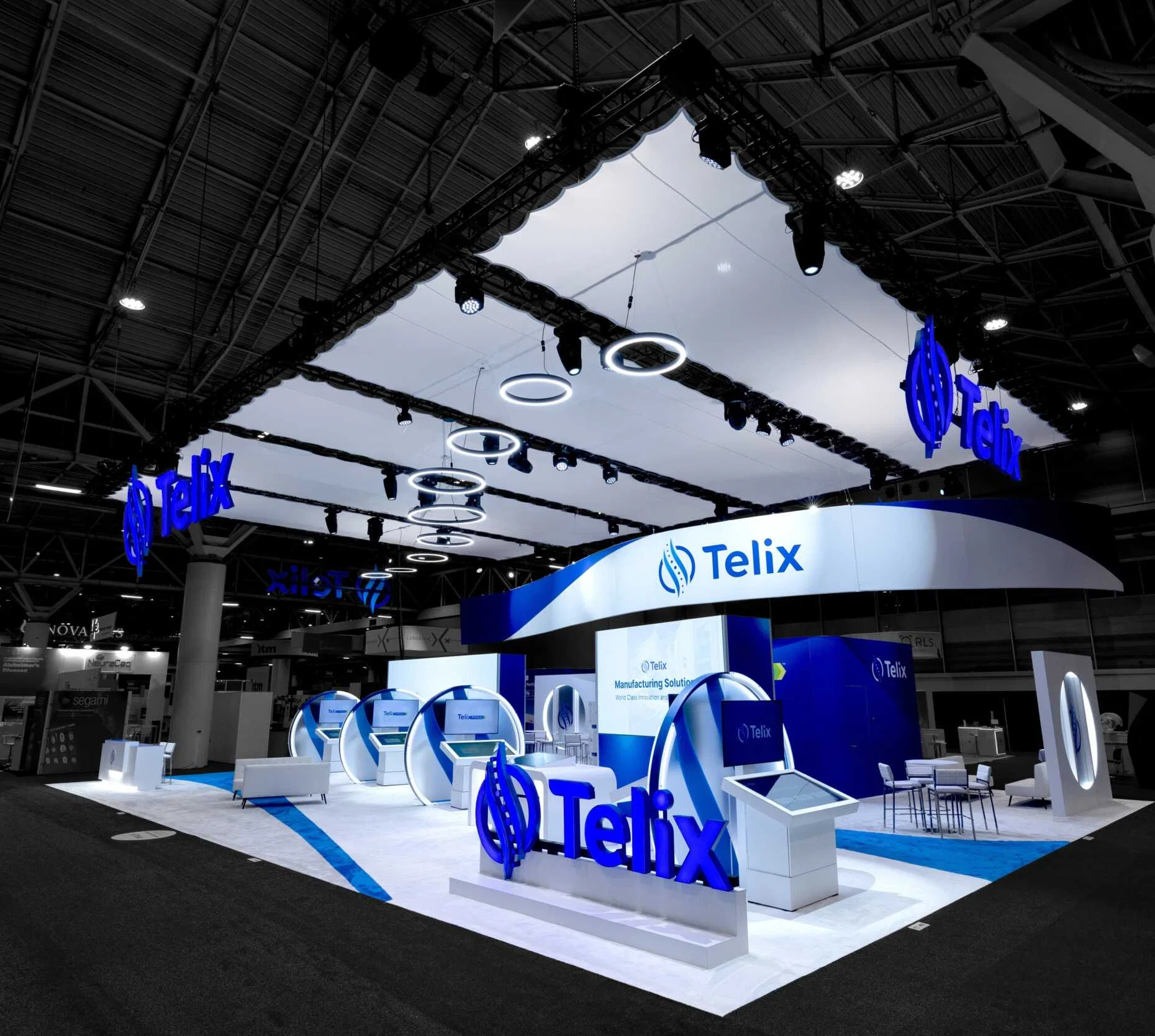
Manufacturing buyers want to see whether the booth can carry product weight, technical explanation, and live motion without falling apart under pressure.
In National Harbor, Manufacturing Expo Services works best when the presentation path, lighting, and handoff roles all support the product story.
What we focus on
- Show the product without overcomplicating the room.
- Keep technical staff close to the buyer path.
- Plan for heavy parts and easy repeat use.
- Make follow-up material simple to carry away.
The buildings that host National Harbor events
Large classic conference hotel with ballroom and breakout relevance for association and gala-style programs.
Salamander DC. 36,100 square feet of total meeting space.
Embassy Suites Washington, DC-Convention Center: embassy Suites Washington, DC-Convention Center is positioned in Washington, DC within the Convention Center / Mount Vernon Square area.
How National Harbor floor operations work
Labor in National Harbor runs venue-by-venue, not citywide.
Practical planning rules for the services in National Harbor: Frame labor execution around planning, supervision, sequencing, and compliance with venue-specific rules. Use the downtown convention core, National Harbor resort campus, and suburban conference belt as distinct operating contexts.
National Harbor neighborhoods and event districts
Arlington, National Landing, Crystal City, Pentagon City form the National Landing and Arlington cluster. Reagan-adjacent Virginia cluster with conference hotels, Metro access, and overflow capacity for citywide programs.
Tysons and Fairfax Corridor runs across Tysons, McLean, Reston. Corporate, theater, and expo submarket extending west toward Dulles and Fairfax County.
What's included in the project scope
For programs that repeat, asset management becomes part of the engagement — storage, graphic rotation, refurbishment, and re-crating are planned rather than one-off.
Scope boundary is as important as scope inclusion.
How a project runs
After the brief, the work turns to the building itself.
Install days are owned by a single on-site lead.
Throughout show hours, the on-site lead stays present.
Strike and closeout happen the same day.
Pricing and scheduling
Every project has the same cost drivers.
Lead time drives everything. Custom: 16 to 20 weeks. Rental: 8 to 12.
What a successful project looks like
Most programs in National Harbor are evaluated on lead-capture volume, meetings booked on the floor, and qualified-pipeline attribution after the show. The booth is a means to those numbers — it is not the number itself.
A week after the show, the booth's actual floor performance is already clearer than any pre-show projection. We document those observations alongside the technical closeout so the next cycle inherits real signal, not nostalgia.
What makes our work different
Working with a National Harbor-based shop matters most when something goes wrong on-site. Solutions live within driving distance instead of on another coast.
Consistency across show dates is the other reason to hire local. The same crew that built the booth runs the install, knows the pack-out, and catches the small things — a missing hardware pack, a graphic edge that needs reseating, a storage crate routed to the wrong bay — without needing the client team to intervene.
The National Harbor event landscape
the Walter E.
The Walter E.
Frequently asked questions
Do you work at Conrad Washington, DC?
Yes.
How does labor work in National Harbor?
It runs venue by venue.
How much lead time is ideal?
Custom builds run best with 16 to 20 weeks of lead time. Rentals take 8 to 12 weeks.
What information kicks off a project?
The show, the venue, the booth number, the dates, and a target budget range. From those, an initial scope and a realistic cost come back within a few days.
Who runs the booth on-site?
One named show-site lead runs the install, the show hours, and the strike. That person carries the floor plan and the punch list from crates to doors and reports up once a day.
Can the booth travel to the next city on our calendar?
Same structure, swappable graphics, standard crates.
What happens if something breaks during show hours?
The on-site lead handles it.